
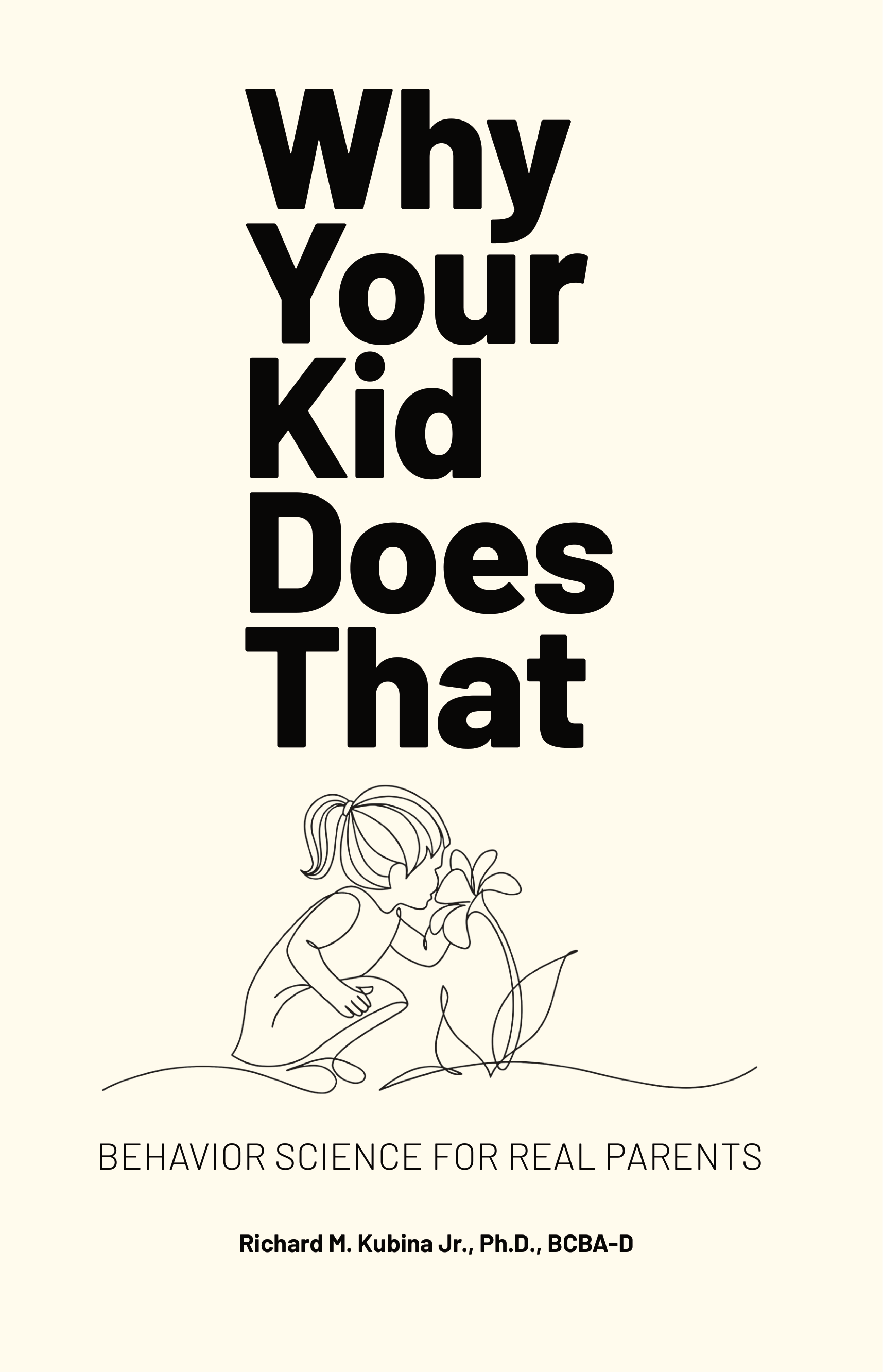

Why Your Kid Does That
Why does your child melt down when the toast breaks? Why has bedtime become a nightly negotiation? The answers aren't in your parenting instincts or your patience. They're in behavior science. And you don't need a PhD to use them.
Why Your Kid Does That explains what drives your child's behavior, drawing on decades of research in Behavior Analysis and Precision Teaching. It's not about labeling kids as 'manipulative' or 'difficult.' It's about understanding the patterns underneath what they do, and learning how to shape new ones.
Written by a behavior scientist, parent, and grandparent, this book offers concrete strategies grounded in research, practical tools for tantrums, whining, sibling conflict, and daily routines, and a clear approach to teaching new behaviors without bribes or power struggles.
No fluff or toxic positivity. Just evidence-based guidance for parents who want fewer struggles, more connection, and a calmer home.
- 01Concrete strategies grounded in research
- 02Practical tools for tantrums, whining, sibling conflict, and daily routines
- 03A clear approach to teaching new behaviors without bribes or power struggles
- 04An accessible introduction to rewards, consequences, and the role of consistency
- 05The science of shaping behavior, without the guilt

Dr. Richard M. Kubina Jr.
Rick has spent more than three decades teaching behavior analysis and precision teaching to graduate students, clinicians, and educators. He’s also a parent and grandparent, which is what made him write this book at 10pm after his own kids were asleep.
His research focuses on how small, repeated changes in environment shape the behavior we see — and how parents, with the right framework, can do this work without it feeling like work.